How Outdated Design Is Sabotaging Your Reading
Books are responsible for a massive part of human development and an active determinant in human history.
By documenting human knowledge across the most diverse fields, books have been a technology that, for centuries, has shaped minds and civilizations through a silent conversation across time and space, becoming a pivotal human event in cognition and communication.
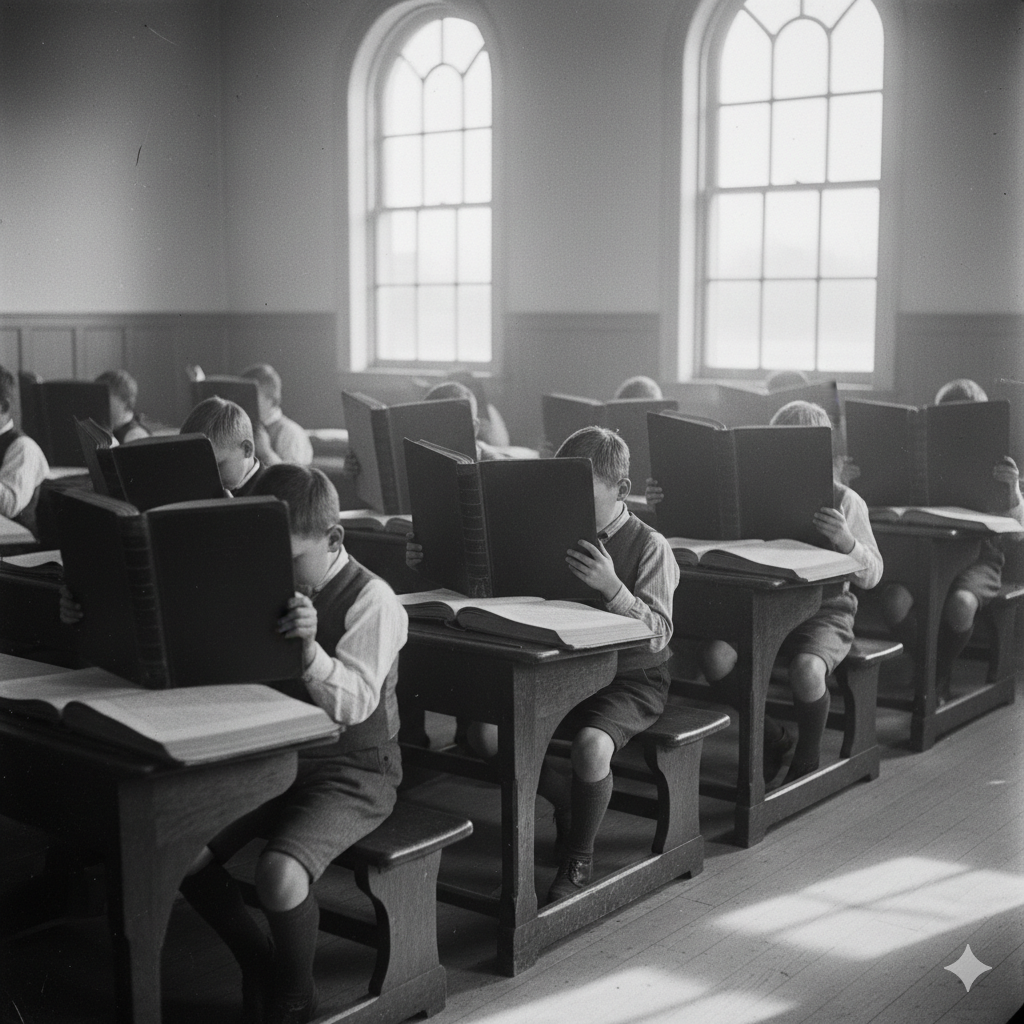
Books – the paper-printed, page-bounded objects that demand both human hands to hold and are preferably read in a sitting position – started to be manufactured about 550 years ago.
Its design was an engineering revolution in its time, featuring a movable-type system and a press that enabled the mass production of printed goods. Compared to scrolls, books were way better (they were more portable and durable) thanks to their bound pages, which allowed non-linear access via pagination.
In turn, pagination allowed books to display their references and sources at their ends, and an intricate system of small symbols, numbers, and letters was created at the time.
Despite its design choices being pragmatic solutions to the constraints of technology and materials at the time, regarding their purposes, books were initially developed with the (almost exclusive) objective of educating human males, targeting their behaviour, concerns, minds, and bodies.
Because the very experience of reading a book was a luxury that very few in human societies worldwide could afford, books were assigned, since their birth, with a status of charm, wisdom, and exclusivity – they rapidly became symbols of wealth, knowledge, learning, and intellect.
Precisely because of its initial association with superiority and wisdom, as objects, (their design and content) books have remained unquestioned and unchallenged by humans since their initial launch.
The fact that more humans (like females) have been increasingly granted the privilege of reading and learning from books over the past 100 years, together with the fact that digital devices have been revolutionizing access to knowledge over the past 20 years, makes it imperative that objects that provide reading experiences have to suit the minds, bodies, and the social concerns of the contemporary humans – which today means ALL humans.
Following this line of thought, considering that reading experiences are intended to reach all humans, printed publications in general should be lightweight and easy to hold with one hand (like digital devices), with a single-page flip. This format allows immersive reading in any position (lying down, sitting, standing) without any physical discomfort.
Today, it is known that while reading a book, humans absorb not only the meaning of the words but also their spatial distribution – a form of spatial memory. This means humans are involuntarily recording the position of the text on a page – whether it is on the right or left side of the book, or at the top, middle, or bottom of the page.
To address and enhance this human skill, the single-page flip should use a page layout that displays elements for navigation, such as titles, chapters, subtitles, page numbers, and so forth, as well as keywords related to the text, which make use of and reinforce the human spatial memory.
Books today still adopt the confusing and uncomfortable way of displaying references and sources established a long time ago, forcing the reader to navigate a labyrinth of small fonts to access (often trivial) information. This old system still treats supplementary information as an optional appendage rather than an integral part of the intellectual journey. This way of displaying references and sources is merely an outdated convention, not a scientific method.
References and sources should be a valuable asset, displayed comfortably on the same page as the content they relate to, making the reading experience easy and fluid.
In an age of hyperlinks and interactive media, digital devices should also follow the same principles, displaying defined pages with the advantage that all sources/references are clickable links that seamlessly connect the reading content to online resources.
Because reading is (still) one of the most efficient ways humans can learn, reading devices must adapt their purposes and fulfill their functions.
Perhaps what is needed for humans to read more is not willpower, but simple design adaptation, both in their physical design as objects and in the display of their content.
Reading is not just an act of willpower; it is an experience shaped by design.
Quietly decoding written words and being taken by its loud silence is one of the most transformative and fulfilling human experiences. And it can definitely be an even more efficient, comfortable, and pleasant one.